01 / THE SOUND
Follow a sound further.
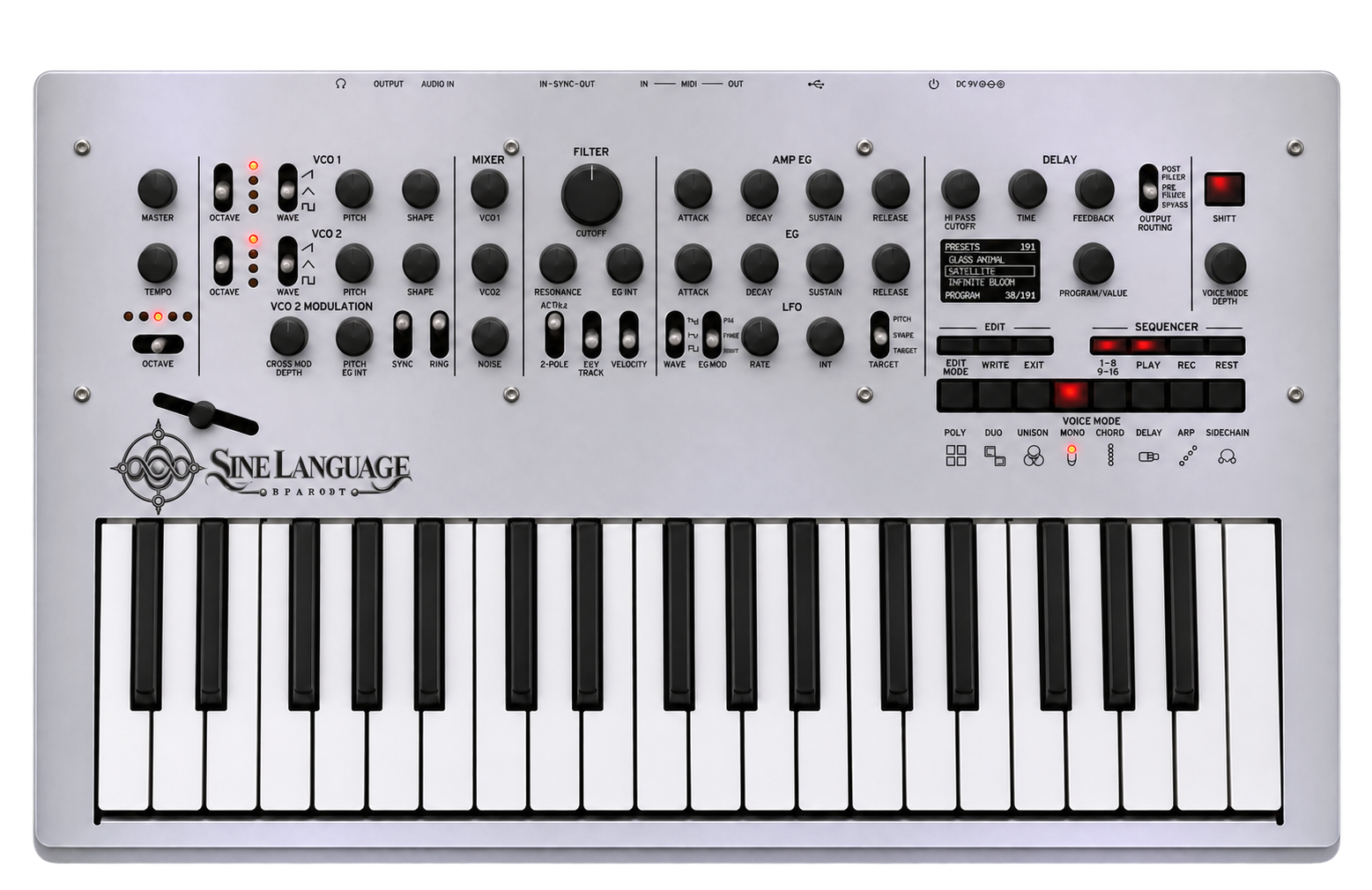
Start with a preset and keep playing. Small changes can take a sound from soft and rounded to bright, rough or almost vocal. Hold a note or chord, turn a control, and listen to its character change.
The analog oscillators give these sounds the Minilogue’s character. Sine Language adds a harmonic approach to exploring them, with a preset library made for this conversion.
02 / A CLOSER LOOK
Harmonic positions,
analog waveforms.
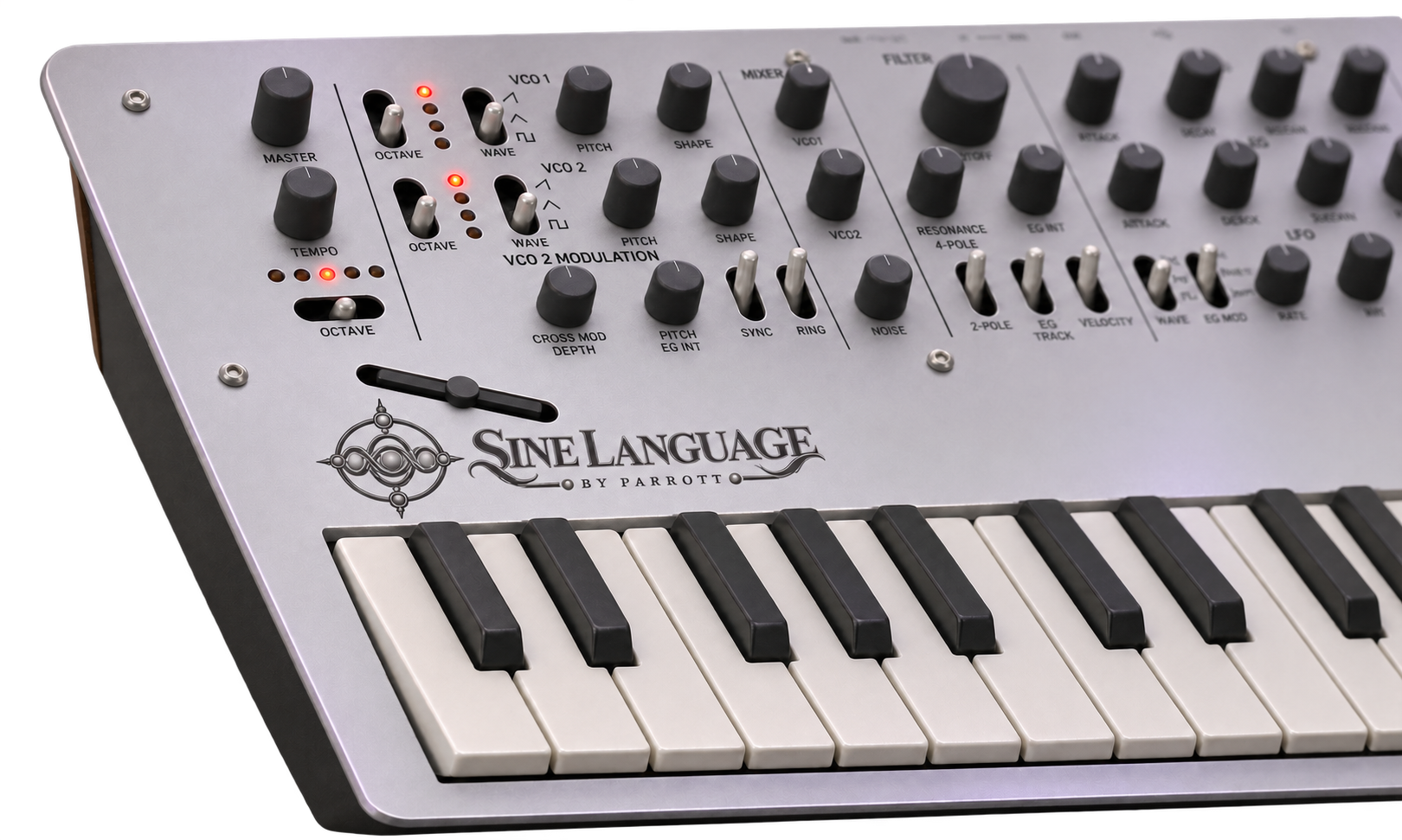
H1 is the fundamental of the note you play. Higher positions follow the harmonic series. The H1–H32 range describes the available tuning positions; the waveforms’ own overtones can extend above that range.
Saw, triangle and square waves each carry their own overtone character. Those waveforms give Sine Language’s harmonic choices a different texture from conventional sine-wave additive synthesis. The analog filters provide another way to shape their brightness and color.
Harmonic selection and subtractive sound design work together in a patch. You can explore that balance with the instrument’s physical controls.
03 / UNDER YOUR FINGERS
Hold a chord.
Change its harmonic world.
Reassign harmonics while notes are sounding, creating evolving pitch movements and unexpected interactions between the analog oscillators.
Hold a chord, change an oscillator’s harmonic assignment, and hear it glide into a different spectral relationship. The sound takes shape as you play.
You can choose the balance between a dense harmonic sound and the number of notes you need. More complex sounds can leave fewer notes available at once.
THE MINILOGUE YOU KNOW
Keep the familiar sounds close.
Classic subtractive sound design remains part of the instrument. Saw, triangle and square waves, analog filters, ring modulation, oscillator sync and cross modulation are available alongside the harmonic controls.
You can work in familiar analog territory or explore more complex harmonic textures. The conversion has its own voicing and response.
COMPARED WITH THE ORIGINAL
What changes for the player?
The familiar analog controls meet a new way of choosing, balancing and moving between harmonics. You can keep a sound in classic Minilogue territory or take it somewhere very different.
HARMONIC EXPRESSION.
| When you’re… | Original Minilogue | With Sine Language |
|---|---|---|
| Finding a sound | Start with the familiar analog controls and program library. | Start with the Sine Language preset library. Choose harmonic positions from H1 to H32 and adjust their levels to give the sound its character. |
| Changing a held sound | Shape sustained notes with the instrument’s filter and modulation controls. | Reassign harmonics while notes are sounding. Hear pitch movements and evolving interactions between analog oscillators as the harmonic relationships change. |
| Shaping the tone | Explore saw, triangle and square waves, analog filtering and oscillator interactions. | Those familiar capabilities remain available alongside harmonic control, including ring modulation, oscillator sync and cross modulation. |
| Building a part | Choose a sound and playing mode that fit the music. | Balance the harmonic density of a sound with the notes your part needs. More complex sounds can leave fewer notes available at once. |
YOUR CONVERSION
An instrument prepared by hand.
$599 per conversion plus shipping.
Customers provide their own original Korg Minilogue. Each instrument receives Sine Language firmware, the original preset library, individual calibration, and extensive quality control testing.
Conversions are available in limited quantities. Register interest to receive details about availability, scheduling, and shipping.